
Για ελληνικά 🇬🇷 κάντε κλικ ΕΔΩ
GENESIS GALLERY / IPPOKRATOUS 121-123, ATHENS 114 72
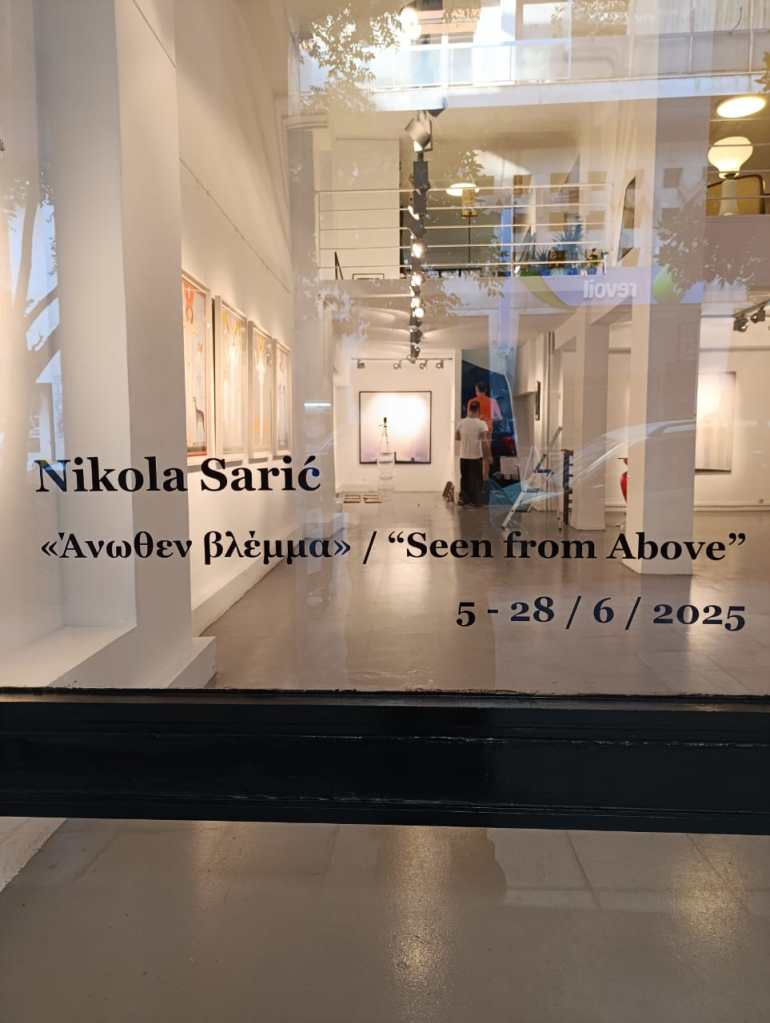
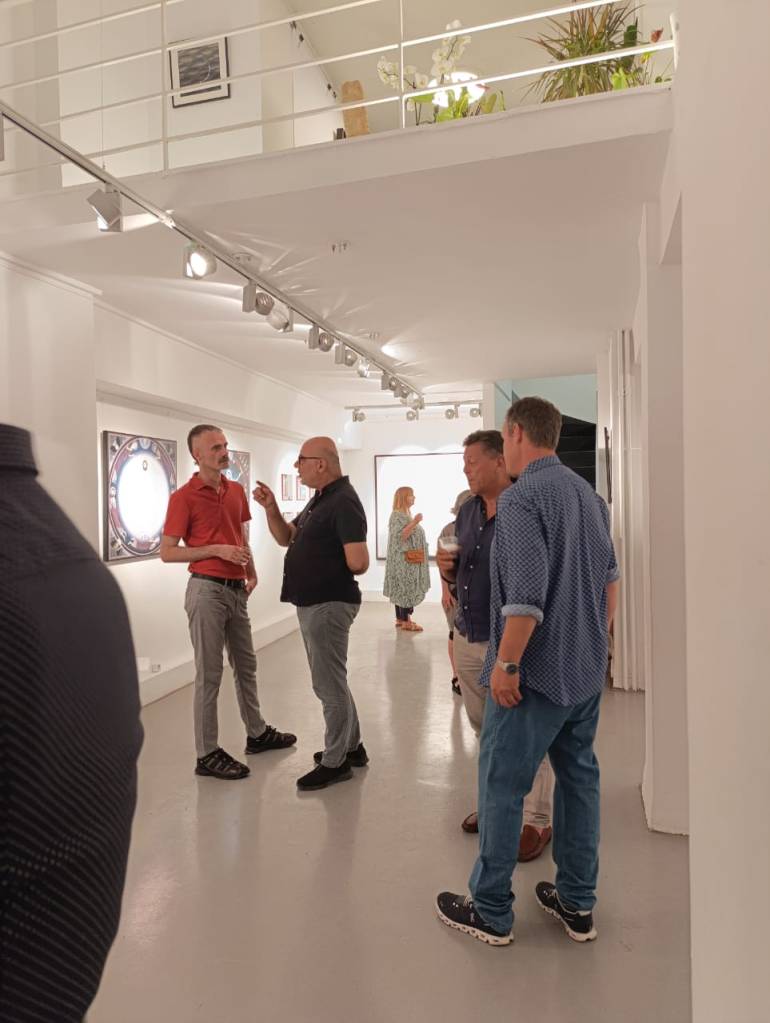
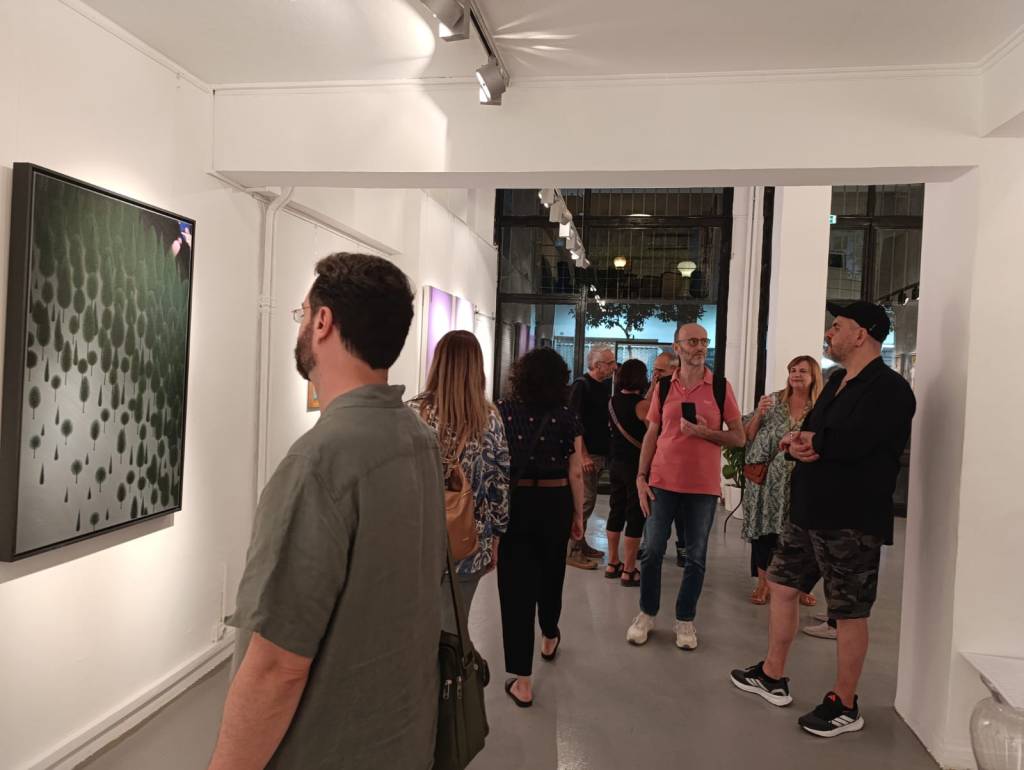
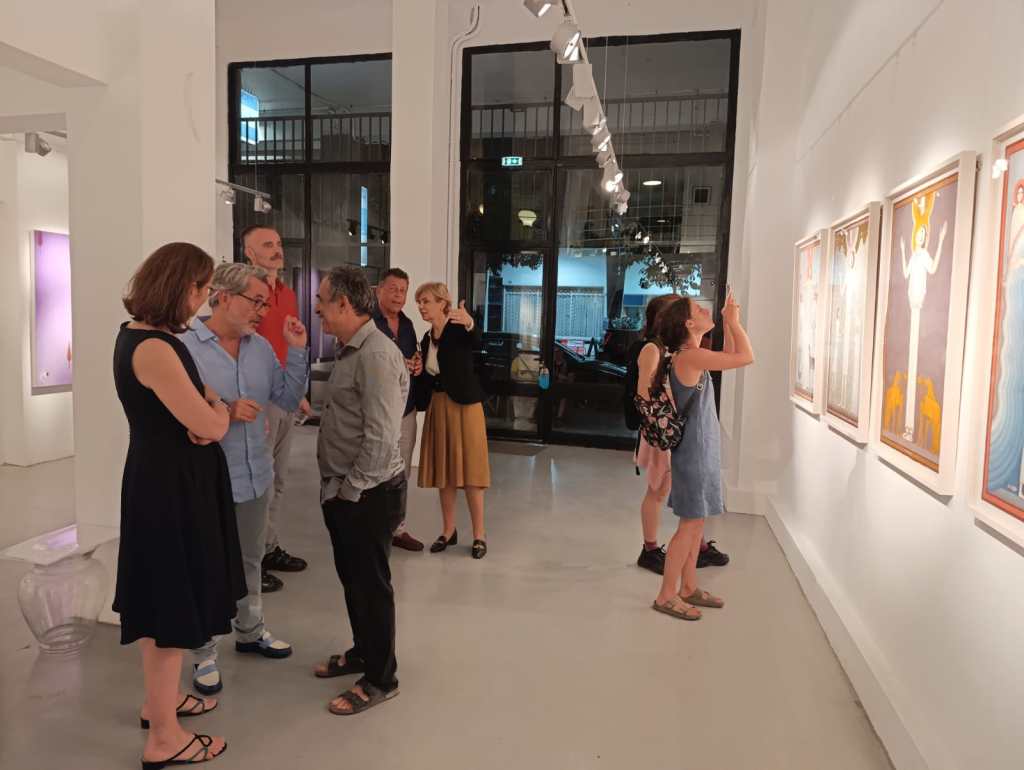
OPENING: 05/06/2025, at 19:30, Duration: 06/06 – 28/06/2025
Nikola Sarić was born in Bajina Bašta, in western Serbia in 1985. In 2011 he moved to
Hanover, Germany where he lives and works. As a youth Sarić discovered and was
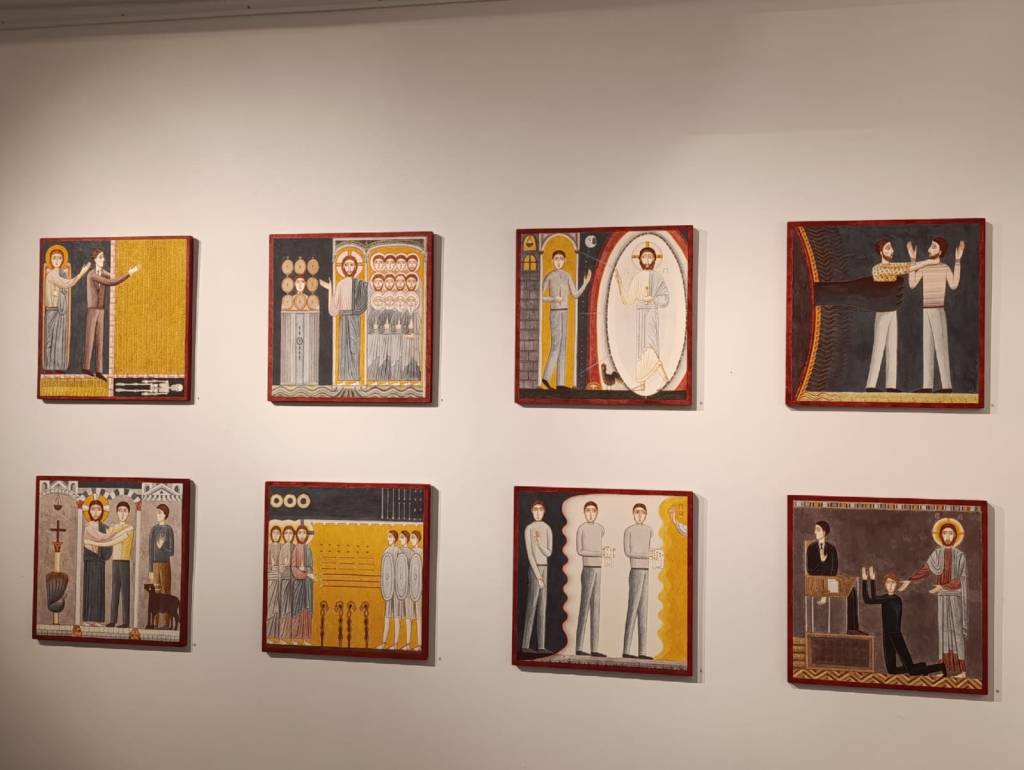
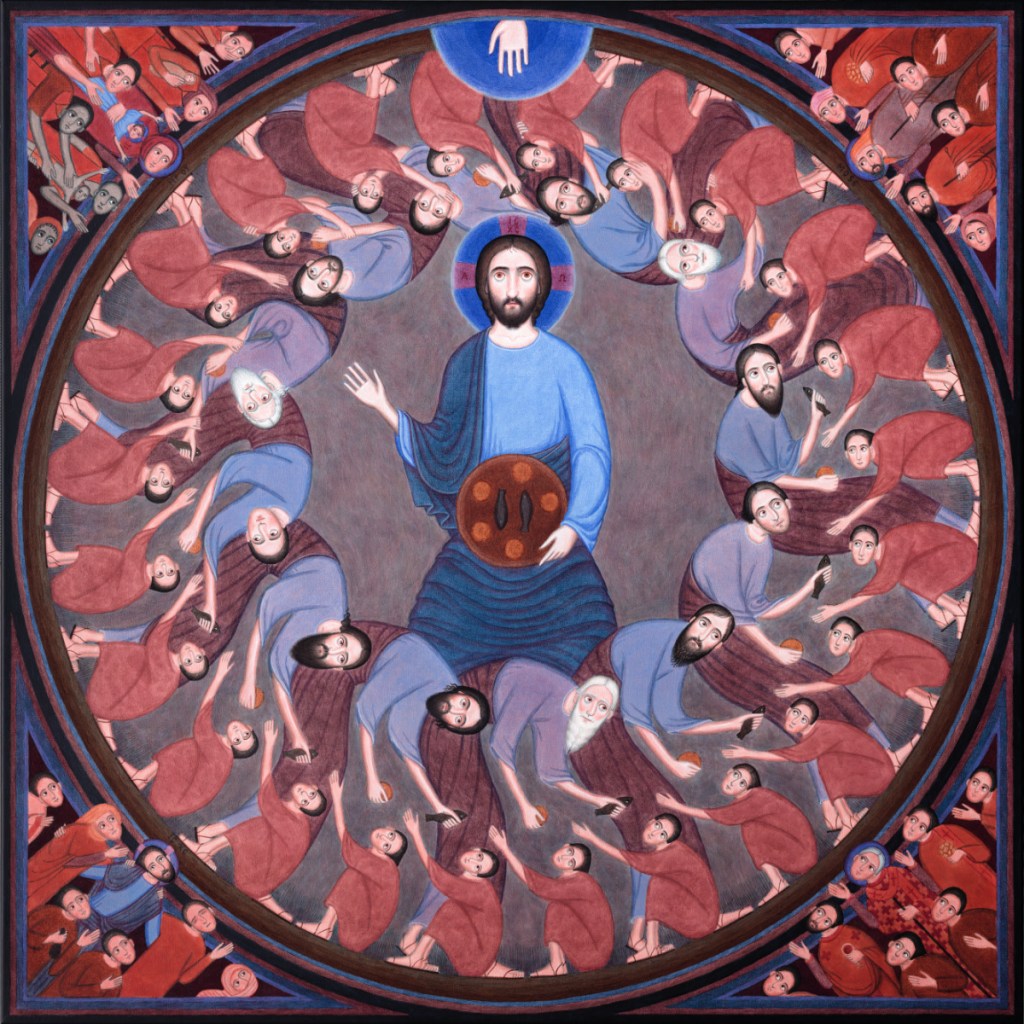
immensely impressed by the spiritual atmosphere and beauty of the medieval murals of the Studenica monastery in Serbia. This experience marks the beginning of his artistic vocation. Subsequently he studied painting the School of Fine Arts of the University of Belgrade (2005-2006) and traditional techniques at the School of Art and Conservation of the Serbian Orthodox Church (2006-2014). At art school he was inspired by the study of Early Christian and Coptic art as well as the
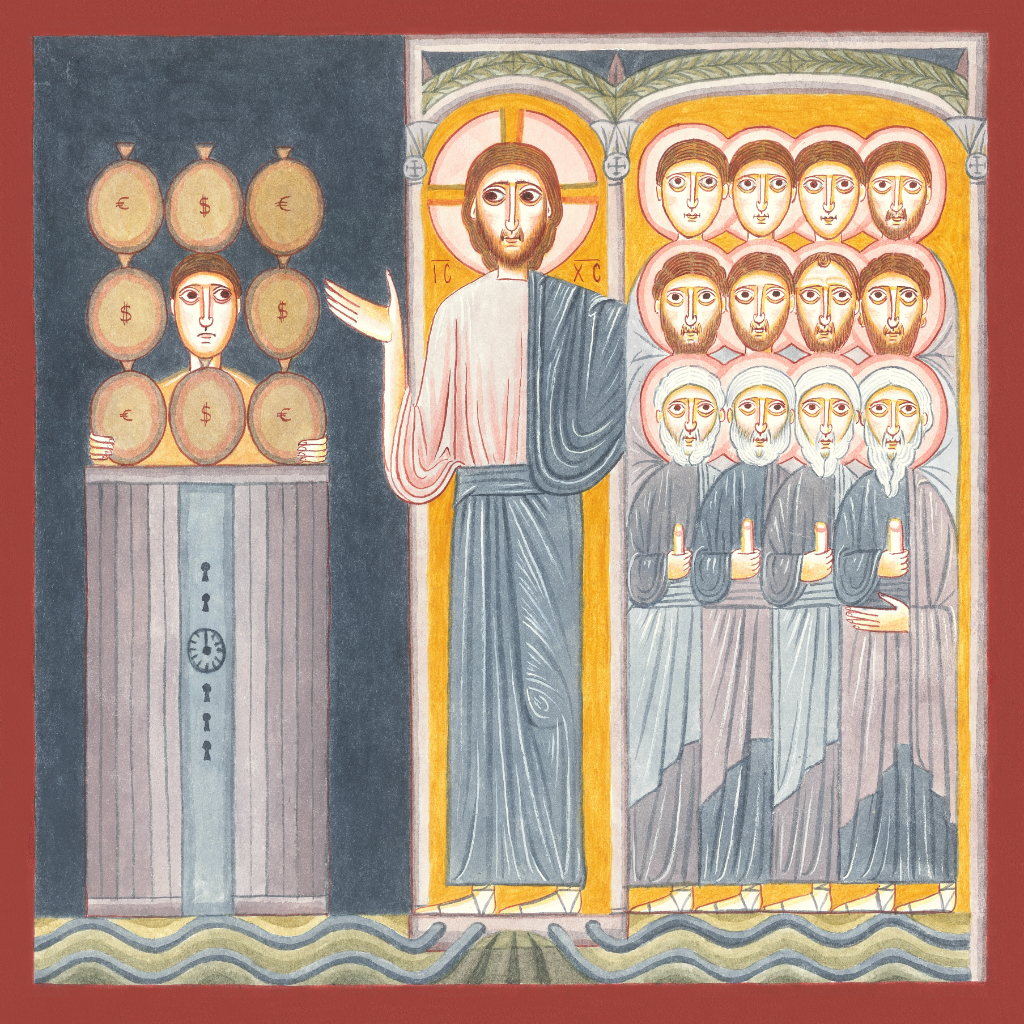
Byzantine mosaics of Ravenna in Italy and the monastery of Osios Loukas in Greece. After completion of his art studies and though the artist consolidates his connection with Chistian Orthodox traditions in iconography and subject matter, we can already discern in his themes and technique the incarnation of new elements from “world” painting and contemporary trends. Nevertheless, in his first series of paintings Witnesses and the Cycle of Life, Sarić stays close to purely Chistian iconography and the stories of the Holy martyrs of the Church, adapting them into graceful compositions of his own in a highly original and poetic style. Soon the artist’s work met an international resonance. Nicola Sarić became well known in France, through his painting depicting modern martyrs, that represents his personal reaction and artistic outcry to the execution of twenty-one Christian Copts of the Libyan church by the terrorists of the Islamic State in 2015. “The Martyrs of Libya” is now in the collection of the museum of the Petit Palais in Paris and displayed within its renowned collection of Byzantine icons. The austere simplicity of the symbolic forms of this work triggers and animates the passage from darkness to light – from the black-clad, masked terrorists to the martyrs in their bright orange prisoners’ suits. It presupposes a discernible distance between the purely religious content and the robust style with which he approaches his sacred subjects. It thus reveals a personal and powerful stylistic approach which goes beyond purely traditional religious iconography. Color provides the central source of light and meaning of the painting. The symmetry of the composition, the frontal placement of the figures and the elimination of unnecessary detail, concentrate the spiritual message of the painting and create a distinctive style.
In his more recent work Sarić, while retaining the austerity and purity of his style, has
enriched his approach and his subject matter with painterly and material elements that gobeyond traditional Orthodox iconography.
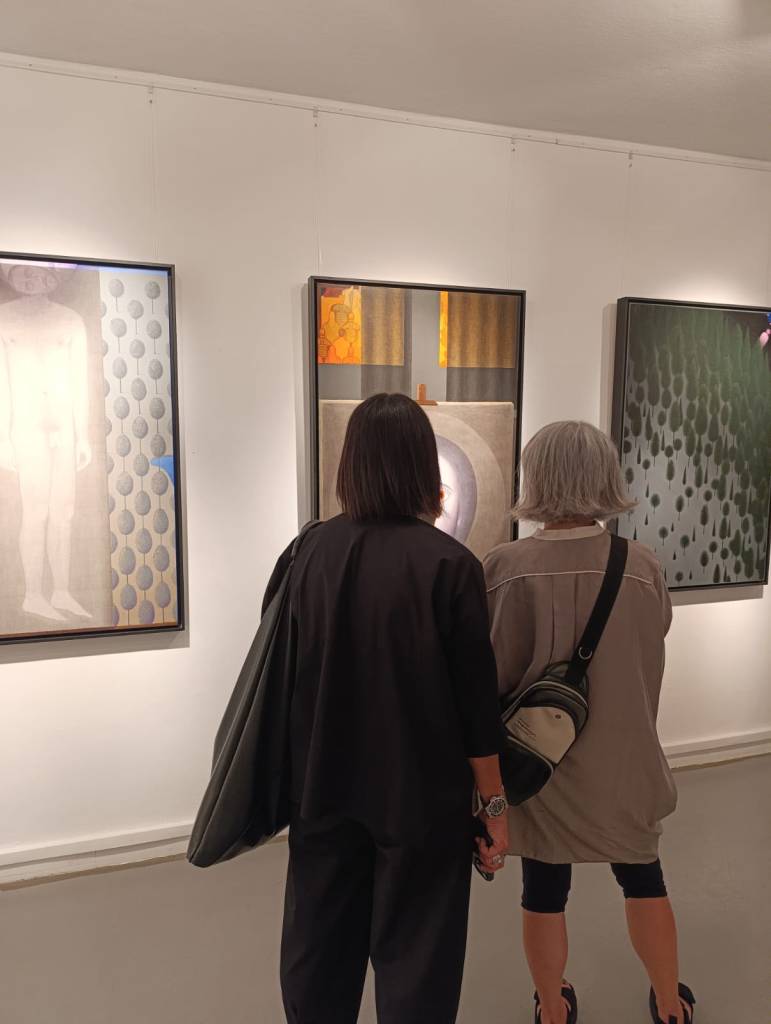
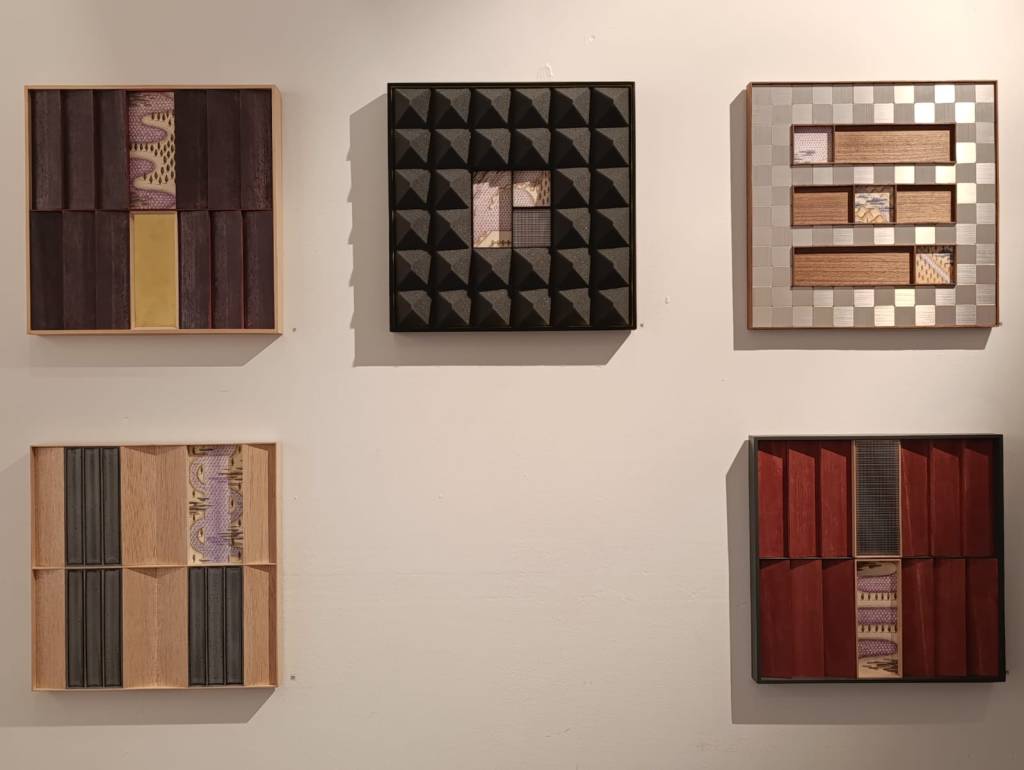
Reflections on the state of the world, current events and physical phenomena have slipped into his work. In the recent series “High Wind” (2024) presented in Athens, the artist reevaluates his approach to painting by introducing into his technique mixed media and new materials.
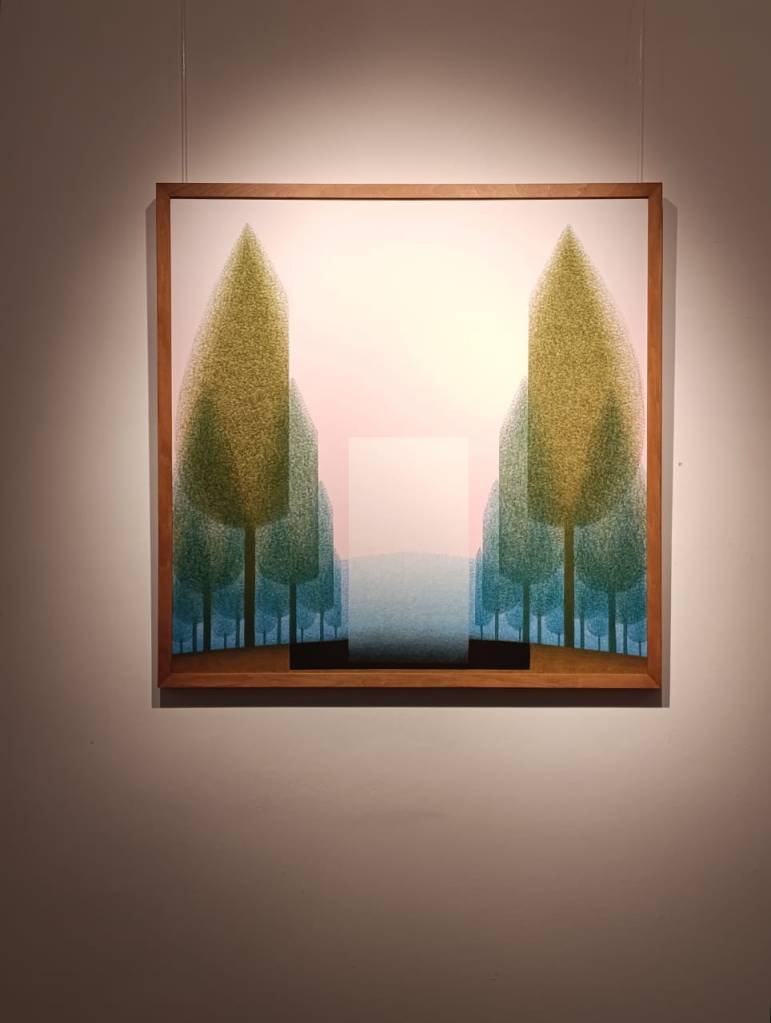
The almost meteorological title of the series is a poetic metaphor emphasizing the radically different appearance of the new work on all levels. Yet the power, symmetry, austerity and frontal composition of the older works is still there. The artist’s reflections on nature and humanity are here more concentrated in the abstract construction of the works. Seen from above, from a heavenly vantage point, the landscapes of “High Wind” point to the climate crisis caused by man on earth. Through his new materials the artist attempts to interpret a changing landscape seen as threatening or ominous.
It is not clear if the high vantage point of “Seen from Above” is that of a human-made drone or that of the eye of God contemplating the earth. Whatever the case may be, even if man here is competing with God, the result is of an unsettled equilibrium. Sarić’s works present us with a fascinating reflection on the destiny of man and the planet as well as on the history and future of art.”
Curated by Katerina Koskina
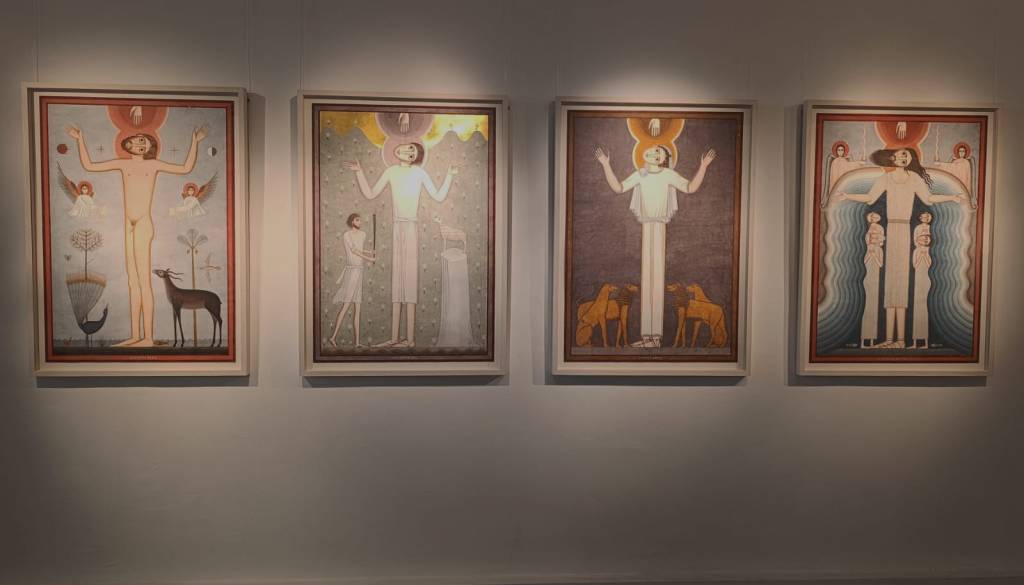
“Seen from Above” Press Release
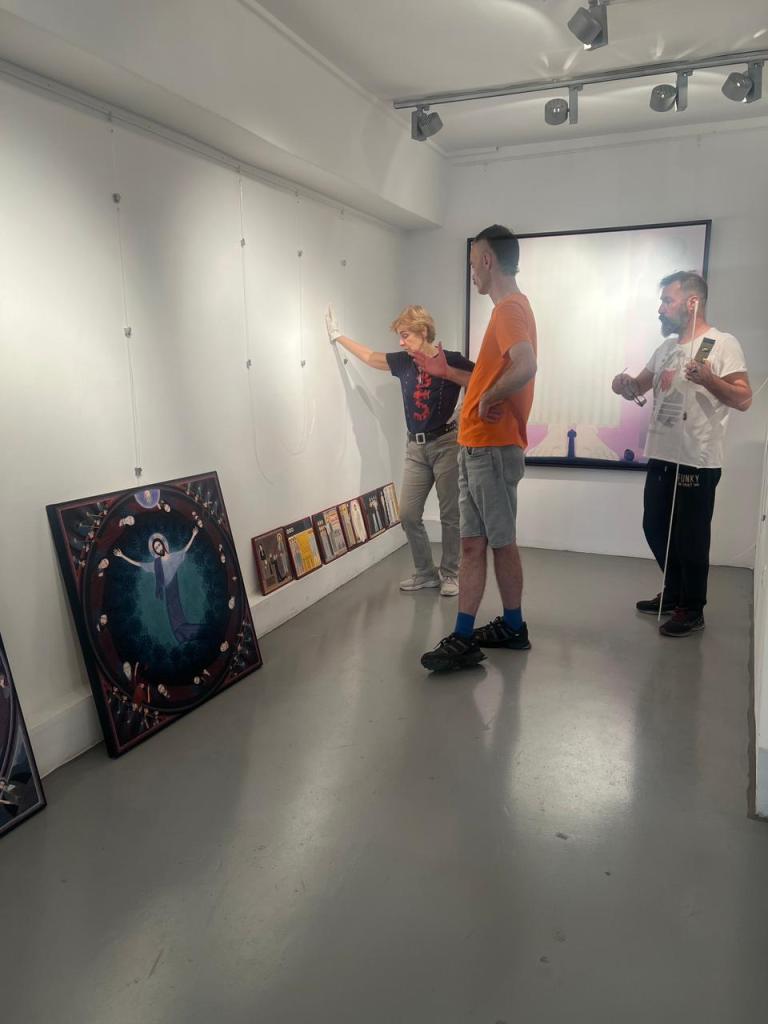


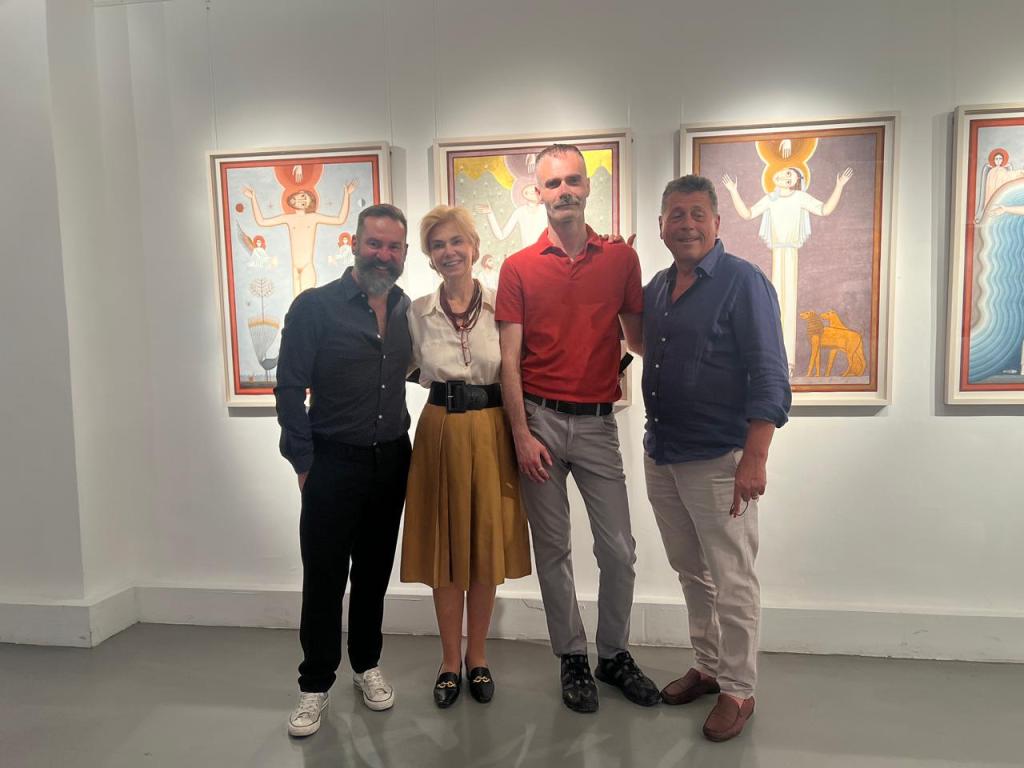




Video from the installation
 POLITES